Hotel Social Media Marketing: Reach, Bookings and Guest Loyalty
For hotels, social media is no longer a nice-to-have but a core sales channel. Guests discover hotels on Instagram, research them on TikTok and find inspiration on Pinterest. If you're not present there, you lose potential bookings to the competition. This guide shows you how to use social media strategically for your hotel – from choosing the right platforms to measuring success.
Case study: how we put social media into practice for hotels
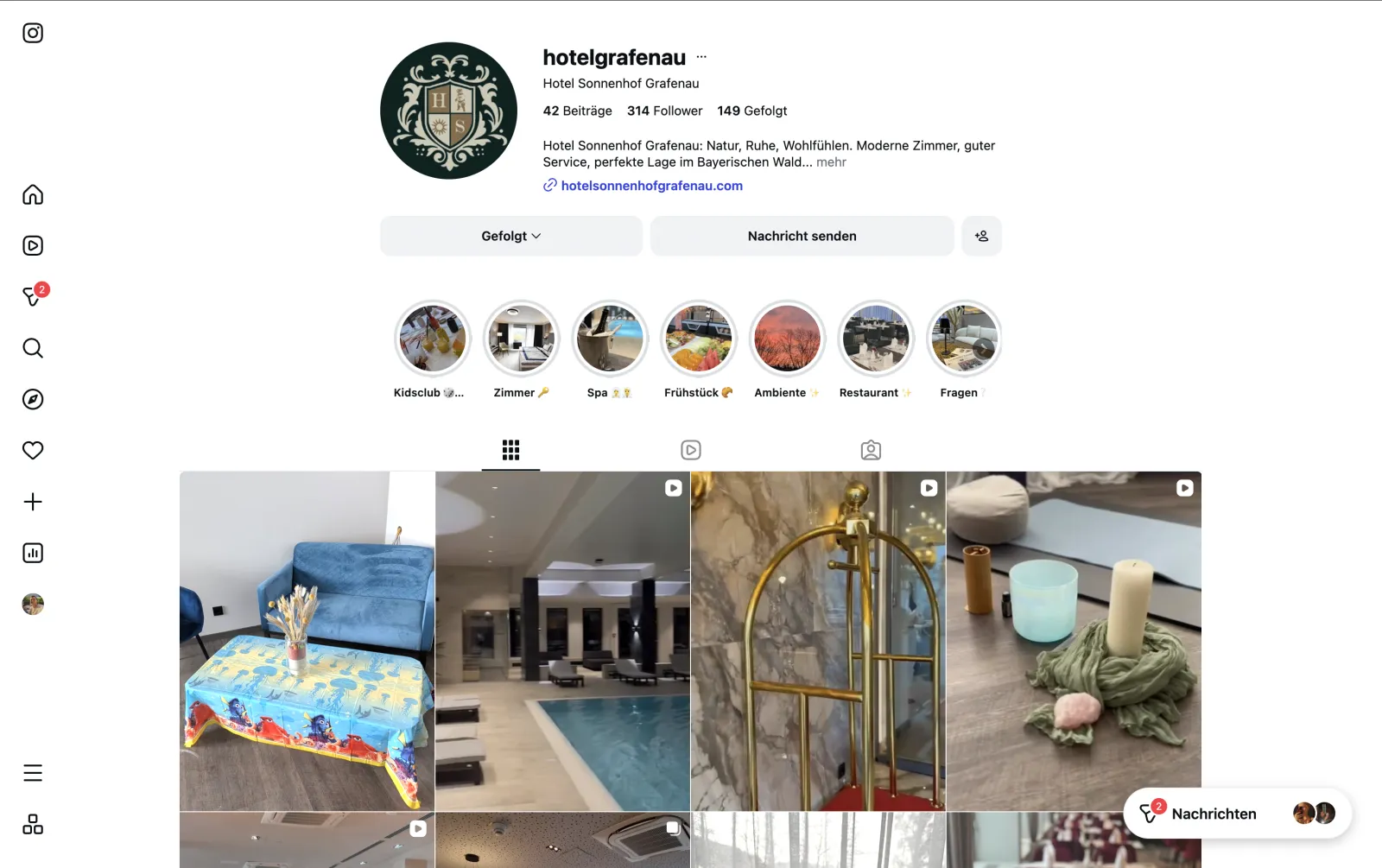
Instagram @hotelgrafenau
An ongoing Instagram presence offering glimpses of the hotel, its surroundings and the spa – Stories, Reels and posts convey the atmosphere, everyday hotel life and offers for regulars and new guests alike.
View Instagram profileUseful next steps

Contents
- Why social media is essential for hotels
- The most important platforms for hotels
- Content strategy for hotels
- Reels, Stories and TikToks: video content
- User-generated content and guest content
- Social media advertising for hotels
- Community management and guest interaction
- Measuring success and KPIs
- Common mistakes in hotel social media
1. Why social media is essential for hotels
More than 80% of travellers use social media while planning their trips. Instagram, TikTok and Pinterest are visual platforms that are tailor-made for the hotel industry: beautiful rooms, wellness areas, culinary experiences and landscape shots create desire and prompt bookings.
For hotels, social media fulfils several functions at once:
- Brand building: your hotel becomes visible and tangible as a brand
- Reach: organic and paid reach help you win new target groups
- Guest loyalty: past guests stay connected to your hotel
- Direct bookings: send people straight to your hotel website via link in bio, Stories and ads
- Reputation: positive content strengthens your image and counters negative reviews
Compared with Google Ads or SEO, social media offers one decisive advantage: you reach potential guests in the inspiration phase – before they actively search for a hotel.
2. The most important platforms for hotels
Instagram is the most important social media platform for hotels. The combination of feed posts, Stories, Reels and carousels lets you show your hotel from many different angles. Reels featuring room tours, behind-the-scenes footage and content about the local area achieve particularly high reach. Find out more in our Instagram marketing guide for hotels.
TikTok
TikTok is the platform with the greatest organic reach potential. Short, authentic videos about everyday hotel life, room tours or local tips can go viral – even from accounts with few followers. For hotels that want to appeal to a younger audience in particular, TikTok is indispensable.
Pinterest works like a visual search engine. Users actively search for travel inspiration, wedding venues or wellness ideas. Pins have an extremely long lifespan – a well-optimised pin can drive traffic to your website for months or even years. Ideal for hotels with strong imagery.
Facebook has become less relevant for organic reach, but it remains important for nurturing your local community, promoting events and as an advertising platform. Facebook Business Manager is also the central platform for Instagram and Facebook ads.
For business and conference hotels, LinkedIn can be a valuable channel for promoting corporate events, meeting rooms and business packages.

3. Content strategy for hotels
A successful social media strategy needs structure. Without a content calendar and clear topic areas, social media quickly becomes an unproductive time sink.
Define your content pillars
Define four to five recurring topic areas that characterise your hotel:
- Rooms and facilities: room tours, close-up shots, before-and-after
- Food and drink: breakfast buffet, restaurant dishes, cocktails, glimpses into the kitchen
- Surroundings and day-trip tips: sights, hiking trails, events in the region
- Team and everyday life: behind-the-scenes, introducing staff, showing everyday hotel life
- Guest experiences: reviews, user-generated content, guest stories
Posting frequency
Quality beats quantity. A realistic rhythm for hotels:
- Instagram feed: 3–5 posts per week
- Instagram Stories: 2–5 Stories daily
- Instagram Reels: 2–3 Reels per week
- TikTok: 3–5 videos per week
- Pinterest: 5–15 pins per week (re-pin older content too)
4. Reels, Stories and TikToks: video content for hotels
Video content dominates every social media platform. For hotels, this offers enormous potential, because atmosphere, spaces and experiences come across far better on video than in photos.
Proven video formats for hotels
- Room tour: take the camera through the room – from the entrance to the balcony
- POV videos: "POV: you're checking in to a 4-star hotel"
- Before/after: room renovation, breakfast set-up, event set-up
- Local guides: "3 places you have to visit on the Lüneburg Heath"
- Behind-the-scenes: kitchen, housekeeping, reception in everyday life
- Seasonal content: Christmas decorations, the summer pool, autumn atmosphere
5. User-generated content and guest content
User-generated content (UGC) is the most credible content a hotel can have. When real guests post about their stay, it comes across as more authentic than anything you produce yourself.
How to encourage UGC:
- Create photogenic moments in your hotel (Instagram corners, special decor, signature drinks)
- Display your Instagram handle visibly around the hotel (key cards, mirrors, menus)
- Repost guest content in your Stories and feed (with permission)
- Create your own hotel hashtag and promote it
- Respond to mentions and tags promptly and appreciatively
6. Social media advertising for hotels
Organic reach is important, but paid social media advertising delivers predictable results. Two advertising formats are particularly relevant for hotels:
Meta Ads (Instagram & Facebook)
Meta Ads offer the best targeting for hotels: you can filter by location, interests (travel, wellness, food and drink), behaviour and even similar audiences (lookalike audiences). These have proven effective:
- Retargeting: reach people who visited your website but didn't book
- Reach campaigns: promote seasonal offers within a radius of 100–300 km
- Engagement campaigns: show high-quality Reels and posts to new target groups
Pinterest Ads
Pinterest Ads are particularly effective for hotels with strong imagery. The platform reaches users in the planning phase – exactly when booking decisions are made.
For a comprehensive advertising strategy, we recommend combining social ads with SEO and Google Ads. A specialised hotel marketing agency can plan the right channel mix for you.

7. Community management and guest interaction
Social media is not a one-way street. How you interact with your community determines whether followers turn into guests.
- Comments: reply to every comment – ideally within two hours
- Direct messages: answer DMs quickly and personally. This is often where bookings happen
- Story interactions: use polls, question stickers and quizzes in your Stories
- Reviews: respond to Google and platform reviews promptly and professionally
Modern hotels increasingly rely on AI-powered chatbots that answer guest enquiries on Instagram and WhatsApp automatically – around the clock.
8. Measuring success and KPIs
No measurement, no progress. You should evaluate these metrics every month:
- Reach: how many people see your content?
- Engagement rate: likes, comments, shares and saves relative to reach
- Follower growth: net growth per month
- Website clicks: traffic from social media to your hotel website
- Bookings: direct bookings generated via social media channels
- Story views: average views per Story
- Best-performing content: which formats and topics work best?
Use the built-in analytics tools of Instagram (Insights), TikTok (Analytics) and Pinterest (Analytics). For cross-channel analysis, a tool such as Later, Hootsuite or Metricool is a good choice.
9. Common mistakes in hotel social media
We see hotels make these mistakes again and again:
- No plan: random posting without a strategy or content calendar
- Only self-promotion: constant offer posts instead of added value and inspiration
- Stock photos: generic images instead of authentic shots from your own hotel
- No interaction: comments and messages are ignored or only answered days later
- Too many platforms: a mediocre presence on every channel instead of a really good one on two or three
- No videos: posting only photos, even though Reels and TikToks bring significantly more reach
- Inconsistency: weeks-long gaps between posts destroy your standing with the algorithm
- No measurement: posting without knowing what works and what doesn't
Good hotel marketing integrates social media as a fixed part of the overall strategy – not as an isolated channel that runs on the side. Take a look at our portfolio too, to see how we put social media into practice for hotels.