Hospitality Marketing: The Complete Guide for Hotels and the Hospitality Industry
Hospitality marketing combines brand management, digital channels and guest relationships into one holistic system. This guide shows how hotels and hosts in the German-speaking market can win more guests, delight them and keep them for the long term.
Contents
1. What is hospitality marketing?
Hospitality marketing covers every activity hotels, restaurants and tourism businesses use to reach guests, win them over and build loyalty. Unlike classic product marketing, the focus is not on a one-off purchase but on an experience – from the first contact through the stay to the recommendation afterwards.
The term goes beyond pure hotel marketing: it includes food and beverage, wellness, events and every touchpoint of hospitality. Hospitality marketing puts the guest at the centre of all communication and unites brand identity, service design and digital visibility into a single whole.
How it differs from classic marketing
- An emotional core: Hospitality marketing does not sell products – it sells experiences, feelings and memories. That calls for storytelling on a different level.
- Service as marketing: Every interaction with a guest – whether check-in, breakfast or a quick reply to a Google review – is also a marketing activity.
- A long-term relationship: While classic marketing often aims for a one-off sale, hospitality is about returning guests and personal recommendations.
- Seasonal dynamics: Campaigns have to take seasonality, school holidays and local events into account – a rhythm that consumer goods brands do not experience in the same way.
Hospitality marketing is therefore not a single channel or an isolated department. It is the sum of all touchpoints that accompany a guest from the first impulse to the next visit.
2. The guest journey in hospitality marketing
The guest journey describes a potential guest's path from the first spark of inspiration to the recommendation afterwards. Each stage requires different content, channels and messages. If you understand the journey, you can intervene in exactly the right places.
Dreaming – the inspiration phase
Guests do not yet know where they want to travel. They scroll through Instagram, read travel blogs or watch TikTok videos. In this phase, visually strong content that stirs emotions is what counts: landscape shots, snapshots of hotel life, short Reels with atmospheric storytelling.
For hotels this means: social media marketing is the strongest lever in the dreaming phase. Authentic images, user-generated content and collaborations with micro-influencers create visibility among people who do not yet have concrete plans.
Planning – the research phase
As soon as a destination has been chosen, active research begins. Guests compare hotels on Booking.com, read Google reviews, search for "hotel + destination" and visit hotel websites. This is where search engine optimisation decides whether your hotel is found at all.
At the same time, AI-powered search is gaining importance: guests ask ChatGPT or Google AI for recommendations. Hotels that are well positioned with structured data, high-quality content and a strong web presence will also be recommended by AI systems.
Booking – the booking phase
In the booking phase, the conversion rate is what matters: how easy is it to book directly? Is the website fast, mobile-optimised and trustworthy? Is there a reason to book directly rather than through a portal – such as a best-price guarantee or a welcome extra?
Here, hospitality marketing relies on clear calls to action, a seamless booking engine and retargeting campaigns for users who abandoned the booking process.
Experiencing – the experience phase
During the stay, marketing becomes service design. Personalised welcome messages, recommendations for local experiences, a surprise upgrade or a handwritten note – these are all marketing activities that delight guests and turn them into advocates.
Digital touchpoints such as a hotel app, automated pre-stay emails and self check-in complement the in-person experience and create efficiency without feeling cold.
Sharing – the recommendation phase
Satisfied guests share their experience – on Google, TripAdvisor, Instagram and in personal conversation. Hospitality marketing makes it easy for them: a subtle prompt to leave a review in the check-out flow, a photo spot in the hotel that invites sharing, or a follow-up email with a friendly thank-you.

3. Digital channels in hospitality marketing
Choosing the right channels depends on your target group, budget and type of business. Here is an overview of the most important digital channels for hotels and hosts:
Your own website
The hotel website is the centre of all digital activity. It has to do three things at once: inspire (with strong imagery and storytelling), inform (with clear facts about rooms, prices and location) and convert (with a seamless booking path).
A well-built website quickly pays for itself through saved OTA commissions. Every direct booking that comes via your own site rather than a portal means 15–25% more margin.
Search engine optimisation (SEO)
SEO for hotels means visibility for the searches potential guests actually make. That includes local keywords ("hotel on Lake Garda with pool"), long-tail queries ("romantic weekend Black Forest") and informative content that builds trust.
Technical SEO – fast loading times, structured data, mobile-first design – forms the basis. Content SEO with travel guides, blog articles and FAQ pages delivers the traffic. The two have to work together.
Paid advertising (SEA & social ads)
Google Ads on your own hotel name protect you from losing commission when OTAs bid on your brand name. Beyond that, Performance Max campaigns for regional searches and Meta Ads for retargeting campaigns are worthwhile.
On social media, Instagram and Facebook ads are particularly suited to the dreaming and planning phases. Short video formats with emotional imagery achieve the best cost-per-click figures.
Social media
Instagram, TikTok and Pinterest are the three strongest platforms for visual hospitality marketing. Each platform has its own language: Instagram for curated aesthetics, TikTok for authentic snapshots, Pinterest for planning inspiration.
Consistency is key. One post a week achieves little – three to five high-quality posts create visibility and community. You will find detailed strategies in our guide to hotel social media marketing.
Email marketing
Email remains one of the most profitable channels in hospitality marketing. Pre-stay emails build anticipation and enable upselling. Post-stay emails generate reviews and lay the groundwork for the next visit. Newsletters with seasonal offers reactivate former guests.
Segmentation is crucial: a business traveller needs different content from a family or a couple on a short break.
AI visibility and chatbots
More and more travellers use AI assistants to search for hotels. Hotels with structured data, detailed website content and a positive review profile are recommended more often. Find out more in our guide to hotel ChatGPT marketing.
4. Guest loyalty and loyalty programmes
Winning back an existing guest costs five to seven times less than acquiring a new one. Even so, many hotels invest most of their budget in acquiring new customers. Hospitality marketing balances the two – with smart loyalty strategies.
Why guest loyalty is so valuable
- Higher revenue per stay: Returning guests tend to book longer stays and use more additional services.
- Lower acquisition costs: No OTA commission, no expensive click prices – the direct channel is already established.
- Organic recommendations: Regular guests become brand ambassadors who are more credible than any advertising.
- Planning certainty: A base of returning guests stabilises occupancy even in weaker periods.
Loyalty programmes for hotels
Large chains rely on points systems – Marriott Bonvoy, Hilton Honors, IHG Rewards. Independent hotels and smaller groups need different approaches:
- Simple tier models: A room upgrade from the third stay, a spa treatment from the fifth. Clear, transparent and no app required.
- Personal relationships instead of points: A handwritten note, remembering their favourite tea from last time, a birthday greeting – attentiveness beats algorithms.
- Exclusive benefits for direct bookers: Guests who book directly get late check-out, a welcome drink or a restaurant voucher. This strengthens the direct channel for good.
CRM as the foundation
Guest loyalty only works with clean data. A CRM (customer relationship management) system stores preferences, stay history and communication. On this basis you can create automated campaigns: birthday mailings, anniversary offers, seasonal invitations.
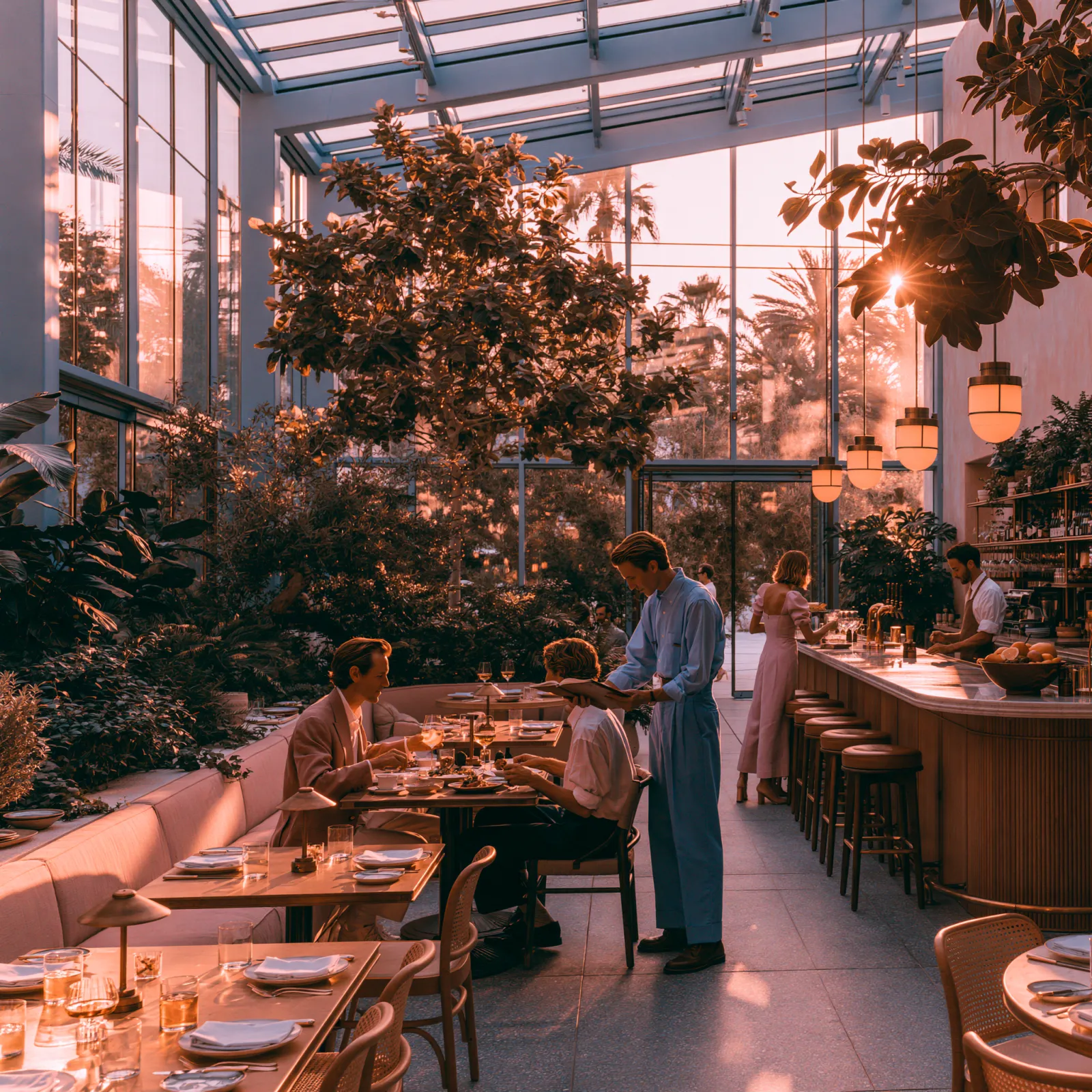
5. Reputation management
Online reviews are the most important trust factor when choosing a hotel. 93% of all travellers read reviews before making a booking. An improvement of 0.1 points on the Google scale can measurably increase the conversion rate.
Focus on Google reviews
Google reviews influence not only the booking decision but also local rankings. Hotels with more and better reviews appear higher in the Local Pack – the map result shown for location-based searches.
Strategies for more Google reviews:
- Provide a direct review link via QR code in the room or at reception
- An automated post-stay email with a friendly request for feedback
- Encourage staff to actively approach satisfied guests
- Optimise the timing of the request: ideally straight after a positive experience (e.g. after a particularly good breakfast)
Handling negative reviews
Negative reviews are unavoidable – and an opportunity. A professional, empathetic reply shows future guests how the hotel deals with criticism. The most important rules:
- Reply within 24–48 hours
- Address the guest personally and show understanding
- Express specific regret without becoming defensive
- Offer a solution or invite them to get in touch directly
- Never reply with a generic response – every reply should be individual
TripAdvisor, Booking.com and other portals
Alongside Google, portal reviews play a central role. Even though hotels have less control here, the same principles apply: respond quickly, communicate authentically and learn from feedback. A consistent review profile across all platforms strengthens credibility.

6. Personalisation and use of data
Personalisation is the supreme discipline of hospitality marketing. Today, guests expect experiences tailored to their individual preferences – from the offer on the website to the room amenities.
Data sources for personalisation
- Booking data: Travel dates, room category, additional services, booking channel
- Stay history: Previous visits, services used, feedback
- Web behaviour: Which pages were visited? Which offers were clicked?
- Communication preferences: Email, WhatsApp, phone? How often does the guest want to be contacted?
- Reviews and feedback: What did they particularly like? What was criticised?
Personalisation in practice
Personalisation does not have to be complex. Even simple measures make a difference:
- A pre-stay email with the guest's name and specific recommendations based on the booking
- Dynamic website content: returning visitors see "Welcome back" instead of a generic homepage
- Room set-up based on known preferences (type of pillow, minibar contents, room temperature)
- Segmented newsletters: different content for families than for business travellers
Data protection and GDPR
In the German-speaking region, data protection is particularly strict. Hospitality marketing must be GDPR-compliant: obtain consent, store data only for its specific purpose, observe deletion periods. Transparency towards the guest builds trust – and is a legal obligation at the same time.
7. Hospitality marketing trends
The industry is changing fast. These trends will shape hospitality marketing in the coming years:
Artificial intelligence
AI is changing hospitality marketing on several levels: chatbots handle initial guest enquiries, AI-powered pricing (dynamic pricing) maximises revenue, and generative AI helps create content for social media and websites.
Particularly relevant: AI-based search engines such as Google AI Overviews and ChatGPT are being used to search for hotels. Hotels need to prepare their content so that these systems interpret and recommend it correctly.
Sustainability as a marketing factor
Sustainability is no longer a niche topic. Guests expect transparent communication about environmental measures – from energy savings and regional cuisine to plastic-free rooms. Important: authenticity instead of greenwashing. Only communicate what you have actually implemented.
Certifications (Green Globe, EU Ecolabel, Viabono) lend credibility and can be placed prominently in the booking path.
Experiential marketing
The trend is moving away from a pure overnight offer towards a curated experience. Hotels that put together experience packages – a wine tasting with a local winemaker, a guided hike, a cookery class with the head chef – stand out and achieve higher average rates.
In marketing, that means less "rooms from €99" and more "a weekend you will never forget". The story sells, not the price.
Video and short-form formats
Reels, TikToks and YouTube Shorts dominate attention. Hotels that regularly produce short, authentic videos reach younger audiences where they look for travel inspiration. The barrier to entry is low: a smartphone, good light and real moments are enough.
Voice search and conversational AI
"Hey Siri, find me a hotel in Munich with a pool" – voice search is growing. Hotels should optimise their content for natural language: long, spoken questions instead of clipped keywords. FAQ pages and structured data (Schema.org) help voice assistants deliver the right answers.
8. Best practices for the German-speaking market
The DACH market (Germany, Austria, Switzerland) has its own rules. What works in the USA or Asia cannot be transferred one-to-one. Here are the most important particularities:
Language and tone
German-speaking guests prefer a professional yet warm tone. Overusing the informal "Du" (the casual form of "you") comes across as inappropriate to many target groups – especially in the upscale segment. Striking the right balance between warmth and respect is crucial.
In terms of content: specifics beat superlatives. "Breakfast from 12 regional suppliers" is more convincing than "The best breakfast in town".
Strengthening direct bookings
OTA dependency is particularly high in the DACH region. Many hotels pay 15–22% commission to Booking.com or HRS. Hospitality marketing with a focus on direct bookings can cut these costs drastically:
- Communicate a best-price guarantee clearly on your own website
- Exclusive benefits for direct bookers (upgrade, welcome gift, flexibility)
- Run Google Ads on your own hotel name to counter OTA ads
- Retargeting campaigns for website visitors who did not book
Local SEO and Google Business Profile
A fully maintained Google Business Profile is essential for hotels in the DACH region. Many guests search for accommodation directly on Google Maps. Regular posts, up-to-date photos and quick answers to questions considerably improve visibility in the Local Pack.
Making the most of seasonality
The German-speaking market is strongly seasonal: summer holidays, Christmas markets, ski season, long weekends around public holidays. Successful hotels plan their marketing campaigns at least three months in advance and adapt content, offers and budgets to each season.
Understanding the review culture
German guests tend to rate more critically than international guests. A 4.2 on Google is a good score in the DACH region. At the same time, German-speaking travellers place great value on reviews – they are the most important trust factor after personal recommendations.
Working with a specialised agency
Hospitality marketing requires industry knowledge. Agencies that work exclusively with hotels and hosts understand the specific challenges: seasonality, OTA competition, guest expectations and the particularities of hotel technology (PMS, channel manager, booking engine).
Take a look at our portfolio to see how we deliver hospitality marketing for hotels in the DACH region – from social media and SEO to conversion-optimised websites.